
Rajan will evolve a policy with the help of professional persons for a national consensus if we have to carry on with implementing social and economic changes in a complex economy.

These are the highlights of the seventh bi-monthly monetary policy statement for 2019-20 by the RBI amid COVID-19 pandemic:

Reserve Bank of India Governor Urjit Patel on Saturday exhorted banks to reduce their lending rates to push credit demand in laggard segments, saying banks have benefited from influx of low-cost deposits and its previous repo rate cuts.

The Reserve Bank on Tuesday nudged banks to cut lending rates.

After raising interest rate by a cumulative 250 basis points in 11 months, the Reserve Bank of India (RBI) on Thursday unexpectedly kept benchmark rate unchanged as global banking woes added uncertainty to the economic outlook. Five out of six members of MPC voted to remain focused on the withdrawal of accommodation to ensure inflation aligns with target while focusing on growth, RBI Governor Shaktikanta Das said on Thursday. The Monetary Policy Committee of the central bank decided to take a pause after a rate hike seen in previous six consecutive policies.

Equities went into a tailspin on Wednesday after the Reserve Bank surprised the market with a mid-cycle rate hike in a bid to tame soaring inflation.

'Recent underperformance notwithstanding, equities should constitute a major part of investors' financial portfolio.'

As long as inflation does not decline to a significant level, the Reserve Bank of India would continue its tight monetary stance.

"We expect GDP growth to slow from 7.3 per cent year-on-year in July-September 2016 to 6.0 per cent in October-December 2016 and 5.7 per cent in January-March 2017," Nomura said in a research note.

'In addition, we have geopolitics and politics and all the other things that will affect commodity prices.'

The Reserve Bank on Friday took steps towards normalisation of liquidity management to pre-pandemic levels, with the introduction of the standing deposit facility (SDF) as the basic tool to absorb excess liquidity, and narrowing the liquidity adjustment facility (LAF) to 0.50 per cent from the 0.90 per cent. Governor Shaktikanta Das said the SDF will be at 3.75 per cent, 0.25 per cent below the repo rate and 0.50 per cent lower than the marginal standing facility (MSF) which helps the banks with funds when required. The SDF has its origins in a 2018 amendment to the RBI Act and is an additional tool for absorbing liquidity without any collateral.
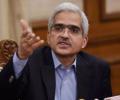
After hiking the repo rate by 0.50 per cent, RBI Governor Shaktikanta Das on Wednesday said future policy actions by the central bank will be guided by the evolving conditions. Addressing a press conference, the governor said the RBI has changed the policy stance to drop the phrase "remains accommodative", and instead opted for "withdrawal of accommodation" for guiding its future moves. The central bank did not hike the cash reserve ratio contrary to speculation, he said, adding that the liquidity withdrawal will be calibrated and measured.

Policy rates have been reduced substantially in 2015.

'We are confident that over the next few years the government will strike a fine balance between populist measures and growth, and manage coalition partners well.'

Former Reserve Bank Governors do not seen any harm in central bank consulting the government before firming up monetary policy initiatives saying such an step would not amount to infringement on its independence.
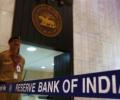
The status quo decision came as a breather as only last week the RBI had pulled up banks for not helping it in monetary policy transmission.
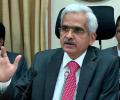
To a specific question on the change in RBI's stance from "neutral" to "accommodative", Das said it means that there will not be any rate hike from here on.

The Rupee is 3.7 per cent undervalued on trade related basis.

'Facilitating conversion of well-run NBFCs into banks is urgently needed.'

Finance Minister Nirmala Sitharaman is scheduled to address the post-budget meeting of the RBI's central board on Monday and highlight key points of the Union Budget 2022-23, including the fiscal consolidation roadmap and high capex plan. It has been a custom that the finance minister addresses the RBI board, consisting of RBI Governor and existing four deputy governors, after the Budget. The meeting has been scheduled for February 14 where she would be addressing the board members and talk about announcements made in the Budget to perk up growth hit by three waves of COVID-19, sources said.

IT majors along with metal names Sesa Goa and Hindalco buck trend.

Amid fears of a third wave of coronavirus pandemic and hardening of retail inflation, the Reserve Bank is likely to maintain status quo on interest rate and watch the developing macroeconomic situation for some more time before taking any decisive action on monetary policy. The RBI is scheduled to announce its bi-monthly monetary policy review on August 6 at the end of the three-day meeting -- August 4-6 -- of the Monetary Policy Committee (MPC). The RBI Governor-headed six-member MPC decides on the key policy rates.

The Covid winter seems to be finally ending for debt-oriented mutual fund (MF) schemes as interest rates peak, especially for those that invest in shorter-maturity papers. In the past two months, shorter-horizon debt schemes - ultra-short, low-duration, and money-market - have together raked in net inflows of Rs 48,000 crore, the highest for two months since April-May 2021. These schemes invest in shorter-maturity papers ranging from three months to a year.
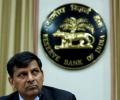
Here is some background on the candidates seen as potential successors to Rajan at the RBI

Foreign investors pulled out Rs 4,285 crore from Indian equities in the first three trading days of the month driven by apprehensions ahead of the third-quarter earnings season and high valuations of domestic stocks. This came following an investment of Rs 15,446 crore in the entire December, data with the depositories showed.

The Reserve Bank will go for a "dovish pause" at Wednesday's policy review announcement amid developments such as a rise in inflation, government maintaining the inflation target band and a likely impact on growth due to local lockdowns on rising COVID-19 infections, analysts said on Monday. Economists at American brokerage Bofa Securities said price stability, growth and financial stability will become the prime focus areas for the central bank going forward. "The RBI MPC (Monetary Policy Committee) should deliver another dovish pause on Wednesday," it said. The policy announcement, the first for the fiscal, will come days after the government maintained the RBI's target to ensure inflation to be within 2-6 per cent band for five more years.
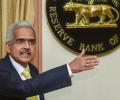
In the second policy review under Governor Shaktikanta Das, the six-member Monetary Policy Committee voted 4:2 in favour of the rate cut.

The Financial Intelligence Unit-India (FIU-India), the national agency responsible for analysing suspicious financial transactions, has received requests from four more offshore crypto exchanges to operate in India again, said a senior government official familiar with the matter. In the beginning of 2024, India had banned nine crypto exchanges - Binance, Kucoin, Huobi, Kraken, Gate.io, Bitstamp, MEXC Global, Bittrex, and Bitfenix - for non-compliance with anti-laundering law in the country.

In a tightening cycle, a premature pause in monetary policy action would be a costly policy error, Reserve Bank Governor Shaktikanta Das opined while voting along with five other members of the MPC for raising the key lending rate by 35 basis points earlier this month, according to the minutes of the meeting released on Wednesday. Prior to the December hike in repo rate, the RBI had raised the key short-term lending rate by 190 bps in four tranche.
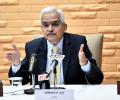
The Reserve Bank of India (RBI) on Wednesday raised the benchmark lending rate by 35 basis points to 6.25 per cent in a bid to tame inflation, which has remained above its tolerance level for the past 11 months. With the latest hike, the repo rate or the short-term lending rate at which banks borrow from the central bank now has crossed 6 per cent. This is the fifth consecutive rate hike after a 40 basis points increase in May and 50 basis points hike each in June, August and September.

The six-member monetary policy committee voted 5:1 for the decision, with only Ravindra Dholakia voting for a 0.25 per cent reduction in rates.

The S&P BSE Sensex shed 286 points to close at 24,539 and the Nifty50 lost 100 points to end at 7,456.
'That way you're not hostage just to US sort of exports to India.'

Endorsing Finance Minister P Chidambaram's call to banks to pass on the benefit of rate cuts to customers, RBI Governor D Subbarao on Thursday said the central bank is also "very conscious" of the need to be supportive of economic growth.

Market participants attribute the stability to the Reserve Bank of India's timely intervention in the foreign exchange market, both in terms of selling and buying dollars.

The Reserve Bank of India kept its policy interest rate unchanged at a five-year low of 6.50 percent on Tuesday.
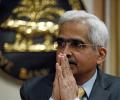
Uncertainty is emerging as the only certainty, said RBI Governor Shaktikanta Das as he emphasised on continued policy support at the December MPC meet during which members expressed concerns over spread of the Omicron variant of coronavirus, as per the minutes of the rate-setting panel released on Wednesday. After three days of deliberations, the six members of the Monetary Policy Committee (MPC) on December 8 unanimously voted for status quo on policy rates for the ninth consecutive time. At the meeting, the RBI Governor said risks stalking the global economy have amplified with rapid spread of the virus mutations, including the Omicron variant, leading to countries scrambling for restrictions.

RBI intervenes in the foreign exchange market to manage volatility and to prevent disruptions to the macroeconomic situations.

The Urjit Patel committee on monetary policy framework has proposed setting up of a monetary policy committee (MPC) that will be headed by the Reserve Bank of India (RBI) governor and accountable for achieving inflation target set by it.
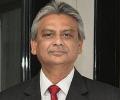
Patra, as executive director of the central bank, was the principal advisor to the Monetary Policy Department since July 2012.
